
Vieux Port and old town
The old harbour with Saint-Jean-Baptiste and Place du Marché
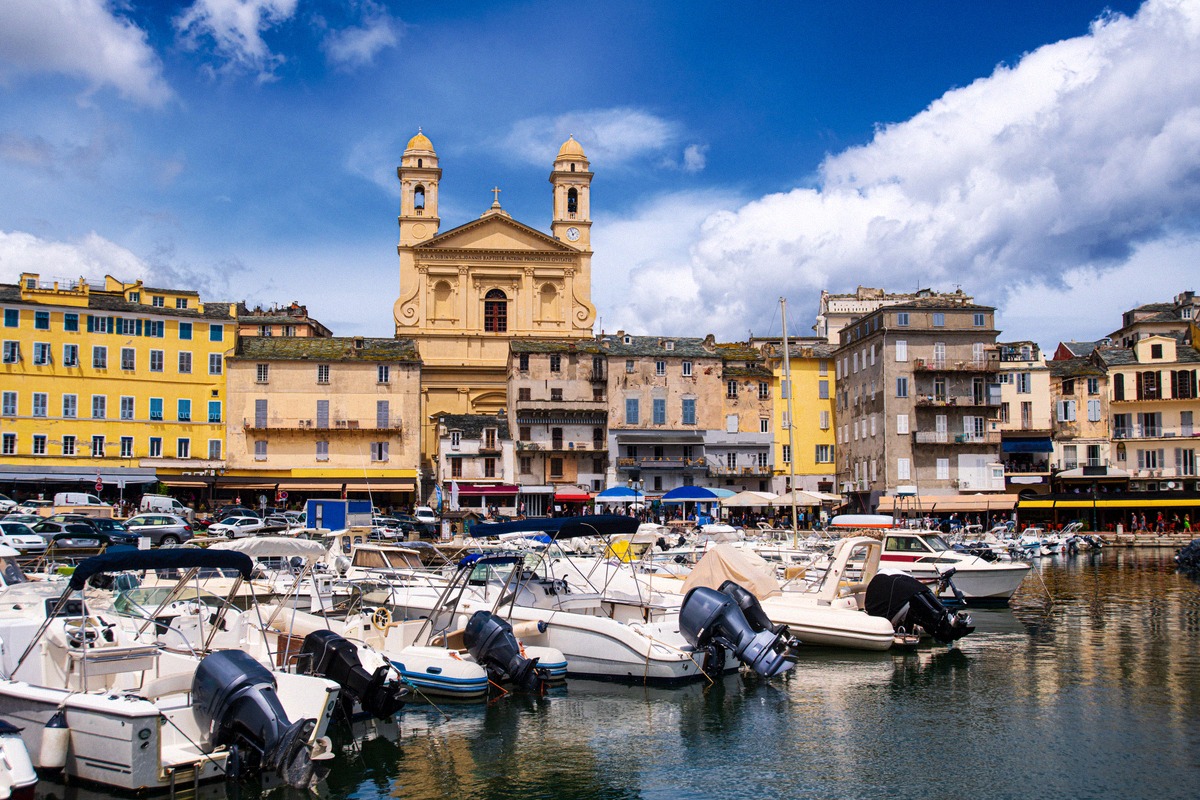
The Vieux Port is Bastia’s old harbour, at the foot of the citadel and between it and Place du Marché. The twin bell towers of the Baroque church of Saint-Jean-Baptiste rise above the harbourside houses, with the squares and lanes of the old town behind.
On this page
The old town by the harbour
The Vieux Port lies at the foot of the citadel, between it and Place du Marché. Fishing boats bob in the harbour basin, the houses along the quay are built in Tuscan style, and above them rises the façade of Saint-Jean-Baptiste. The harbour also takes in the redesigned Conca Marina, where cultural events and festivals are held all year round.
The old town around the harbour is called Terra Vecchia. It is the oldest built-up part of Bastia and was once the town’s commercial centre, while up in Terra Nova, today’s citadel, sat the administration, the courts and the Church.
Place Saint-Nicolas and Rue Napoléon
North of the Vieux Port lies Place Saint-Nicolas, a square with plane trees and café terraces. Walking tours start here, and the Office de Tourisme is on the square. On Sunday mornings there is a flea market on the square, and in October it hosts the Salon du Chocolat et des Délices de Corse.
Rue Napoléon, pedestrianised along its whole length, is also part of the old town. Bastia railway station lies north-west of Place Saint-Nicolas; for train connections, see Getting there.
Place du Marché and Saint-Jean-Baptiste
Place du Marché used to be called Place du Théâtre. On the square stand a fountain with a naiad in white marble and the former town hall. On Saturdays and Sundays local producers hold a market here, and at Christmas time the U Mercà di Natale Christmas market moves in as well.
From the square a passage leads directly to the church of Saint-Jean-Baptiste. The Baroque church was built in the 17th century and is the most important church in town. Its façade with the twin bell towers was rebuilt in the 19th century, and inside is a high altar of polychrome marble. The church is a listed monument.
Oratory of Saint-Roch
On Rue Napoléon stands the Oratory of Saint-Roch, the chapel of a confraternity. It goes back to a vow made after the plague of 1569 and was rebuilt from 1604 after a collapse. Inside it is decorated with gilded stucco and red damask, and the neoclassical façade has a triangular pediment on four columns. The oratory is also a listed monument.
To the citadel and the ferry port
From the Vieux Port the stone staircase of the Jardin Romieu climbs through the garden up to the citadel. For the garden and the route, see Jardin Romieu and Mantinum.
Ferries dock at the ferry port in the town centre, right by Place Saint-Nicolas. For places to stay in Bastia, see Where to stay.
The old town and Vieux Port on the map
All places on the map as a list (5)
Frequently asked questions
Where do walking tours of Bastia start? +
Is Rue Napoléon pedestrianised? +
How do I get from the Vieux Port to the citadel? +
Which days is the market held on Place du Marché? +
More in Bastia
Citadel
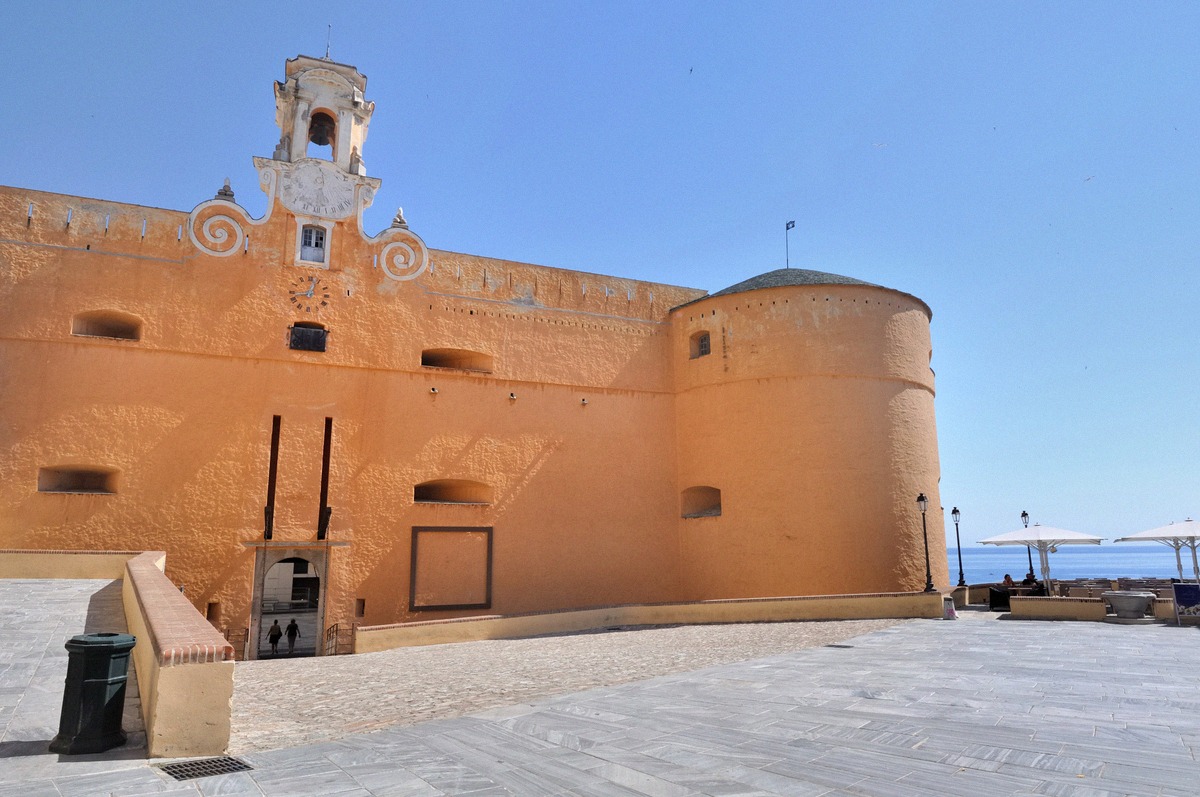
Bastia’s citadel, the Citadelle in French, is the Terra Nova quarter. It takes in the Governors’ Palace with the Musée de Bastia and the former cathedral of Sainte-Marie.
Things to do
Bastia’s sights include the citadel with the Governors’ Palace and museum, the Vieux Port with Saint-Jean-Baptiste, Place Saint-Nicolas and the former cathedral of Sainte-Marie.